Introduction
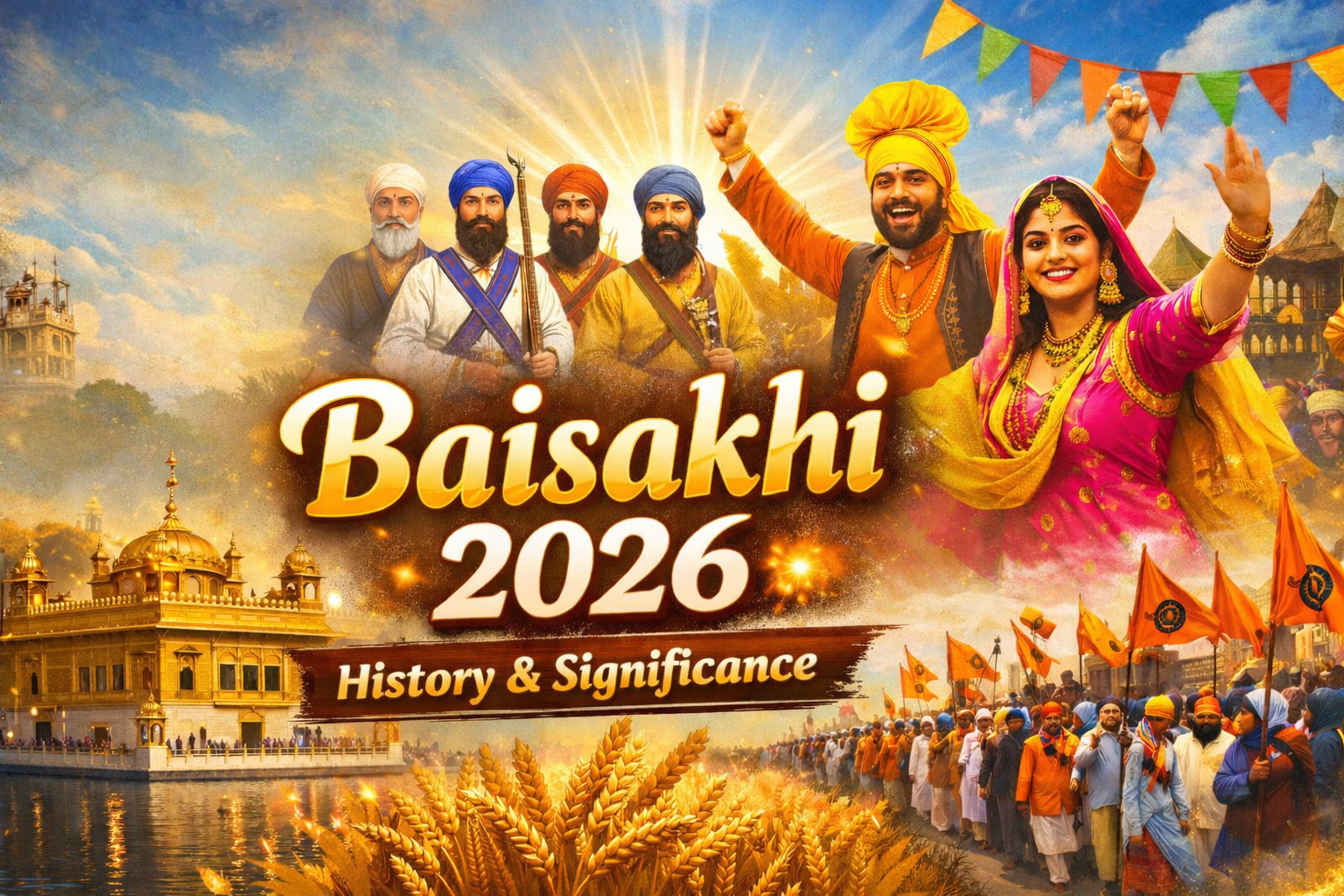
Baisakhi (Vaisakhi) is more than just a festival—it’s a powerful blend of history, faith, and celebration. Observed every year on the 13th or 14th of April, it marks the birth of the Khalsa, the harvest season in Punjab, and the solar New Year in many parts of India.
From the spiritual aura of Gurudwaras to the vibrant beats of Bhangra in golden wheat fields, Baisakhi captures the essence of India’s cultural richness and unity.
📜 The Historic Moment That Changed Sikhism Forever
The most defining chapter of Baisakhi dates back to 1699, when Guru Gobind Singh, the tenth Sikh Guru, created the Khalsa Panth at Anandpur Sahib.
In a gathering of thousands, Guru Gobind Singh asked a bold question:
“Who is willing to give their life for faith?”
Five men stepped forward—later known as the Panj Pyare (Five Beloved Ones). Through the sacred Amrit Sanchar ceremony, they were initiated into the Khalsa and given a new identity rooted in courage, equality, and devotion.
This historic event:
- Eliminated caste discrimination
- Established a fearless Sikh identity
- Promoted unity and discipline
⚔️ The Birth of Khalsa & Sikh Identity
The Khalsa represents saint-soldiers—individuals who are spiritually grounded yet ready to stand against injustice.
Guru Gobind Singh introduced the Five Ks, symbols every initiated Sikh follows:
- Kesh – uncut hair
- Kara – steel bracelet
- Kirpan – sword
- Kanga – comb
- Kachera – undergarment
He also gave Sikhs a unified identity:
- Singh (Lion) for men
- Kaur (Princess) for women
👉 This revolutionized society by promoting equality and dignity for all.
🙏 Spiritual Essence of Baisakhi
For Sikhs, Baisakhi is a day of renewal and devotion:
- Visiting Gurudwaras like the Golden Temple
- Participating in Kirtan (devotional singing)
- Serving and sharing Langar (community meal)
- Joining Nagar Kirtans (religious processions)
It is a reminder to live with:
- Faith
- Courage
- Selfless service (Seva)
🌾 Baisakhi as a Harvest Festival
Beyond its religious importance, Baisakhi is also Punjab’s harvest festival:
- Celebrates the ripening of Rabi crops (especially wheat)
- Marks a time of prosperity and gratitude
The celebrations are full of life:
- Energetic Bhangra & Gidda dances
- Village fairs (melas)
- Traditional food and music
It’s a moment when hard work turns into celebration.
🕉️ Baisakhi Across India – A New Beginning
Baisakhi also marks the solar New Year in different parts of India:
- Pohela Boishakh
- Vishu
- Puthandu
People celebrate by:
- Visiting temples
- Taking holy dips in rivers
- Starting new ventures and businesses
🇮🇳 A Day of Remembrance – Jallianwala Bagh
Baisakhi also holds a somber place in history. On this day in 1919, the tragic Jallianwala Bagh massacre took place at Jallianwala Bagh.
Hundreds of innocent people lost their lives, making Baisakhi not only a day of celebration but also of reflection and remembrance.
🎉 Baisakhi Celebrations Around the World
Today, Baisakhi is celebrated globally:
- 🇨🇦 Canada
- 🇬🇧 United Kingdom
- 🇺🇸 United States
- 🇦🇺 Australia
With grand parades, cultural shows, and community gatherings, the festival continues to unite people across borders.
💬 Timeless Quotes by Guru Gobind Singh Ji
The teachings of Guru Gobind Singh beautifully reflect the spirit of Baisakhi:
“Recognize the whole human race as one.”
“When all other means have failed, it is righteous to draw the sword.”
“Manas ki jaat sabhe eke pehchanbo.”
(Recognize all of mankind as one single caste of humanity.)
“Deh Shiva bar mohe ihe, shubh karman te kabhun na taron.”
(Grant me this boon, O Lord, that I may never refrain from doing good deeds.)
✨ Conclusion
Baisakhi is not just a festival—it is a living legacy of courage, unity, and gratitude.
It reminds us:
- To stand for truth and justice
- To celebrate hard work and prosperity
- To embrace equality and humanity
From the sacred grounds of Anandpur Sahib to the bustling celebrations at the Golden Temple, Baisakhi continues to inspire millions every year.