By B2C Buzz Editorial | Updated April 29, 2026 | 12 min read
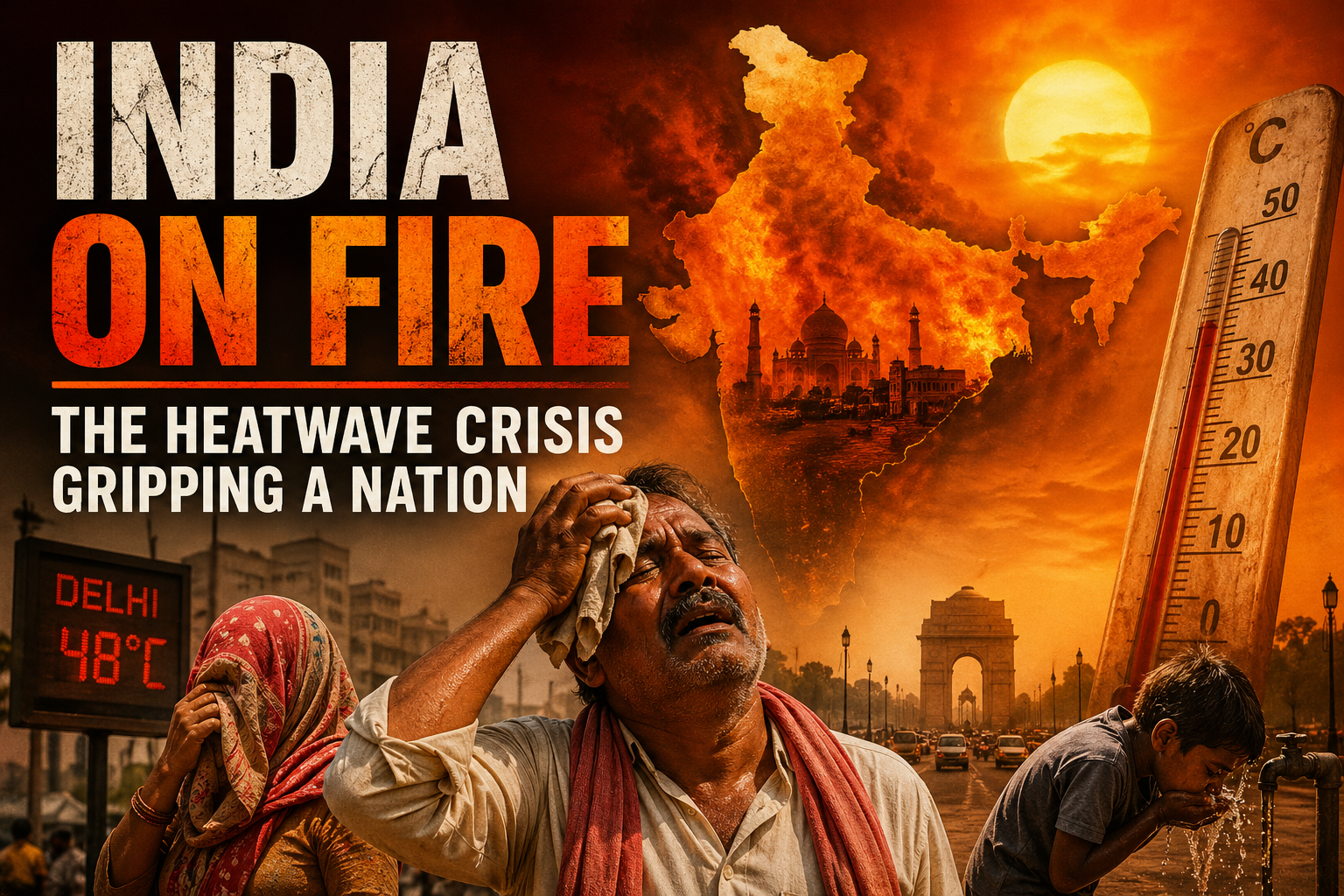
As temperatures smash records and 19 of the world’s 20 hottest cities sit inside India’s borders, the country faces its most brutal summer in modern history.
Overview: A Nation Pushed to Its Limits
It is April 2026, and India is not just experiencing summer — it is enduring a slow-burning emergency. The India Meteorological Department (IMD) has issued sweeping heatwave advisories covering vast swathes of the country, warning citizens in northwest, central, and peninsular India that above-normal heatwave days are expected to persist through June 2026. Temperatures in several regions are already touching 42–45°C, with Sri Ganganagar in Rajasthan recording a searing 44.5°C as recently as late April. Press Information Bureau
What makes this summer different isn’t just the numbers — it’s the breadth, the timing, and the creeping normalisation of what would once have been considered catastrophic. An extraordinary 19 of the world’s 20 hottest cities on April 21, 2026 were located inside India, according to Air Quality Index data. Bhagalpur (Bihar), Talcher (Odisha), and Asansol (West Bengal) topped the list. Mahananda
Key Stats at a Glance
| Metric | Figure |
|---|---|
| Peak temperature recorded (April 2026) | 45.4°C |
| Temp range across NW & central India | 40–44°C |
| Mortality rise after a 2-day heatwave | +14.7% |
| Death increase in Hyderabad at ≥40°C | +57% |
| Mortality risk rise per +0.5°C summer mean | +146% |
| India districts with 5+ extra warm nights/decade | 70% |
| Annual dairy loss from heat stress | ₹2,661 crore |
| World’s 20 hottest cities located in India | 19 out of 20 |
Which Regions Are Worst Hit?
The 2026 heatwave is not confined to one belt — it is an all-India phenomenon. The IMD has flagged Northwest India (Punjab, Haryana, Delhi, Rajasthan, Uttar Pradesh) and Central India (Madhya Pradesh, Chhattisgarh, Vidarbha) as areas of active heatwave stress, while hot and humid conditions are expected over coastal states including Odisha, West Bengal, Tamil Nadu, and Andhra Pradesh. Press Information Bureau
Rajasthan has been particularly brutal. Barmer recorded a peak of 46.4°C on April 8 — a deviation of more than 6°C above average April maximums — breaking decades-old records. In Jaipur, temperatures exceeded 40°C for five consecutive days beginning April 6. Wikipedia
Even Jammu & Kashmir and Ladakh — historically cool — have recorded at least 15 additional warm nights per summer compared to the previous decade. No part of India is truly immune. Substack
How 2026’s Heatwave Unfolded: A Timeline
Early April 2026 — IMD issues pre-season alert. Temperatures begin climbing, driven by strong solar radiation, clear skies, reduced Himalayan snow cover, warming of the Pacific Ocean, neutral ENSO conditions, and dry northwesterly winds preventing cloud formation and rainfall. Mahananda
Mid-April 2026 — IMD activates orange and red colour-code warnings across Rajasthan, Haryana, Delhi, and UP. Around thirty weather stations across India documented temperatures exceeding 43°C on April 8, with many classified as experiencing severe heatwave conditions. Wikipedia
April 21, 2026 — Real-time AQI data confirms 19 of the world’s 20 hottest cities are in India, including seven cities from Bihar, two from Odisha, eight from West Bengal, and two from Uttar Pradesh. Mahananda
Late April 2026 — Asia-wide heat domes push temperatures to a peak of 45.4°C in India, with regional temperatures routinely exceeding 40°C. IMD’s extended forecast shows no meaningful relief through May 6. Countercurrents
April–June 2026 (outlook) — IMD’s seasonal outlook projects above-normal heatwave days over parts of east, central, and northwest India and the southeast peninsula through the entire hot weather season. Press Information Bureau
The Human Cost: A Health Crisis in the Making
The health data from India’s heatwave history is deeply alarming. Research covering data from 2008–2019 found that even a single day of extreme heat was associated with an increase in mortality rates. Heatwaves that lasted two days were associated with a 14.7% increase in daily mortality, with city-level impacts ranging from 3.4% in Mumbai to 24.9% in Ahmedabad. Substack
Multi-city evidence shows deaths increase by 33.3% in north-central India, 43% in Ahmedabad, 57% in Hyderabad, 33% in Maharashtra, and 20% in Surat when temperatures reach 40°C or above. These are not projections — these are documented mortality increases from past events. Today’s temperatures are running even higher. Mahananda
Beyond immediate heat stroke, the long-term health burden is compounding fast:
Stroke risk: Long-term exposure to extreme heat has been associated with an 18% increase in the risk of stroke in India among people over 45. For those who already have diabetes or hypertension, that risk rises by 40%. Substack
Blood sugar and obesity: A January 2026 ADB analysis of data from the National Family Health Survey provides evidence that heat extremes increase prevalence of high blood glucose and obesity in individuals over 45. Substack
Infectious disease: Warmer temperatures accelerate bacterial growth in food and water, triggering diseases such as diarrhoea, cholera, infective gastroenteritis, and dysentery — spreading further due to shortage of clean drinking water. Mahananda
Mental health: Nascent research links severe and sustained heat to more frequent depressive episodes, particularly among older adults and those without access to cooling.
Most vulnerable groups: Children, the elderly, and the poor face the greatest risk. Women, especially those over 45, are a high-risk group because the loss of estrogen cover in this phase leaves them vulnerable to stroke and heart disease. Non-educated individuals — likely because of higher probability of working outdoors — are also disproportionately at risk. Substack
The Economic Toll
India’s economic exposure to extreme heat extends well beyond the healthcare system. Agriculture, dairy, energy, and labour productivity are all under siege simultaneously.
Heat stress negatively impacts dairy animals, resulting in reduced food intake, decreased milk yield, lower milk quality, and poor reproductive performance. The annual milk loss caused by excessive heat in India amounts to around ₹2,661.62 crore each year. Mahananda
In Bihar, agricultural products including mango, lychee, and wheat suffered extensive damage just weeks before scheduled harvests. Fieldworkers described symptoms including dehydration, nausea, and dizziness when attempting outdoor labour during peak temperature periods. Wikipedia
Power demands for air conditioning systems have increased dramatically, straining generation capacity and distribution networks, with extended power outages reported in multiple regions causing further thermal stress to affected populations. Wikipedia
The Science: Why India Is a Heat Trap
India’s geography, climate dynamics, and rapid urbanisation conspire to create a uniquely punishing heat environment. Several forces are compounding in 2026:
Urban heat islands: Daytime heat gets reflected off glass and chrome buildings, is trapped in concrete structures, and then released through the night. In the last decade, nearly 70% of India’s districts experienced an additional five very warm nights per summer. Mumbai has seen 15 extra warm nights, Bengaluru 11, and Bhopal and Jaipur 7 each. Substack
Rising humidity: Even in northern India, which has traditionally experienced dry summers, humidity levels have been rising. Increased humidity adds to heat stress, making the heat index — a combination of temperature and humidity — rise significantly higher than the raw temperature number. Substack
Atmospheric dynamics: Large-scale atmospheric patterns including subtropical persistent highs and quasi-stationary Rossby waves over the mid-latitudes play a role in heatwave formation and persistence, interacting with soil moisture and clear skies to amplify their effects. The Bay of Bengal and Arabian Sea’s warm surface temperatures further exacerbate conditions. PubMed Central
The bigger picture: The WMO has confirmed 2015 to 2025 as the hottest 11 years ever measured, and April 2025 to March 2026 was the hottest 12-month period on record. India sits at the sharpest end of this global shift. Countercurrents
What India Is — and Isn’t — Doing
The IMD issues impact-based heatwave warnings based on colour codes: Green (no action needed), Yellow (watch and stay updated), Orange (be prepared), and Red (take action). Heat Action Plans have been implemented in 23 states that are prone to heatwaves. Mahananda
However, a 2025 CEEW analysis found these plans cover only around 11% of India’s urban population in some of its most at-risk cities. The vast majority of the population remains without structured protection. Mahananda
Experts recommend the following steps as urgent priorities:
- Include night-time temperatures (not just daytime peaks) in all heatwave risk planning
- Officially notify heatwaves as state-specific natural disasters to unlock emergency funds
- Promote heat insurance to protect agricultural and informal-sector livelihoods
- Create a national repository of Heat Action Plans for cross-state learning
- Tap into State Disaster Mitigation Funds specifically for cooling infrastructure
- Expand HAP coverage dramatically beyond the current 11% of at-risk urban populations
Protecting Yourself: What to Do Right Now
While systemic action is essential, individual preparedness saves lives during active heatwave events. The IMD and WHO advise:
- Stay indoors between 11 AM and 4 PM — peak solar radiation hours
- Drink 3–4 litres of water daily regardless of thirst — do not wait to feel dehydrated
- Wear light-coloured, loose cotton clothing and a hat if you must go outdoors
- Check on neighbours, elderly relatives, and domestic workers — many heat deaths happen in isolation
- Recognise heat stroke signs: temperature above 39.5°C, confusion, dry skin without sweating, rapid pulse, nausea — this is a medical emergency
- Follow IMD colour-code alerts actively — orange and red warnings correspond to real mortality risk thresholds
The Long View: India’s Heat Future
An increase of just 0.5°C in India’s summer mean temperatures raises the probability of mass heat-related mortality by 146%. We are no longer in the realm of distant projections. Science
Climate scientists have identified India as particularly vulnerable to thermal extremes, with projections suggesting that by mid-century, parts of India could be among the first global regions to experience temperatures exceeding human survivability thresholds. Wikipedia
Each summer that passes without structural investment in cooling infrastructure, urban greening, climate-adaptive agriculture, and social protection for vulnerable workers makes the next one more deadly. India’s heatwave crisis is not a seasonal news story. It is the defining public health and climate challenge of our era — and it demands to be treated as such.
Sources: India Meteorological Department (IMD) · CEEW · India Water Portal · ADB Health Analysis 2026 · Science Advances · PMC/NIH · Wikipedia (2025 India–Pakistan Heat Wave) · World Meteorological Organization
© 2026 B2C Buzz. All rights reserved.