
India's First Hydrogen Train: A Milestone Launch and the ₹3,000 Crore Fine Print
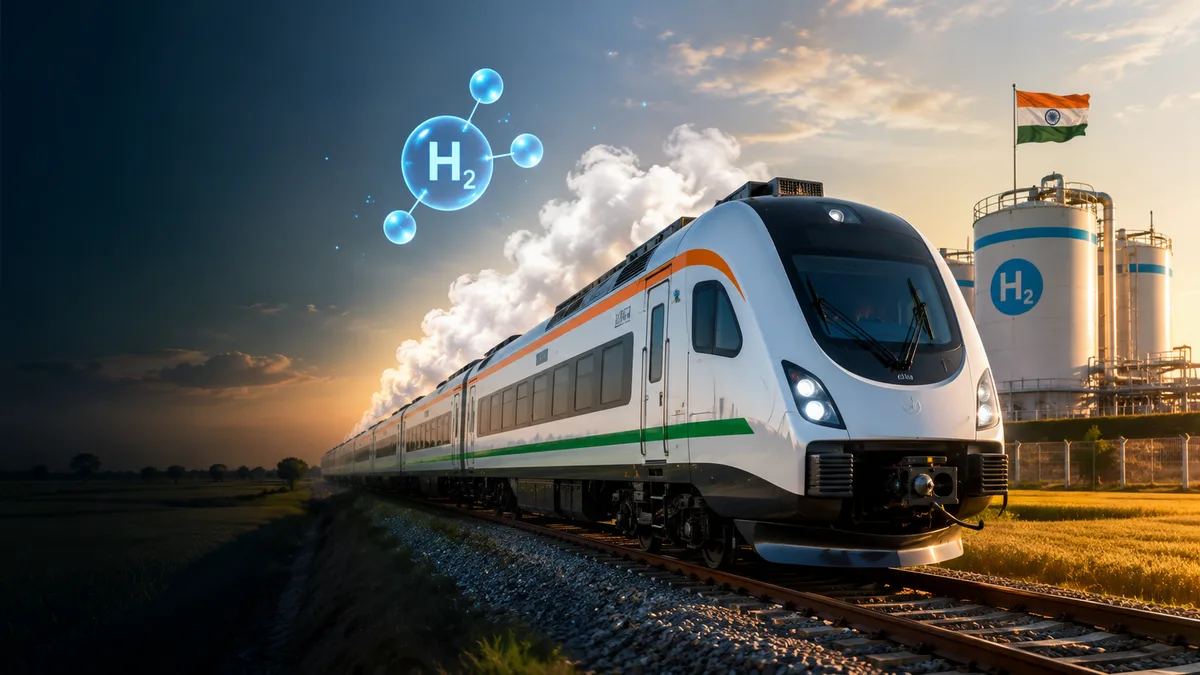
The launch of India's first hydrogen-powered train is a genuine engineering milestone. It is also, at roughly ₹3,000 crore of committed programme spend, a decision worth examining on its numbers rather than its optics.
What the train actually solves
Hydrogen traction targets a specific problem: non-electrified heritage and hill routes where stringing overhead wire is expensive, slow or environmentally contested. On those corridors the comparison is not hydrogen versus electric — it is hydrogen versus diesel.
Where the cost sits
| Cost centre | Why it matters |
|---|---|
| Rolling stock | Fuel-cell units carry a significant premium over comparable diesel sets. |
| Refuelling | Each depot needs storage, compression and safety systems built from scratch. |
| Hydrogen supply | Green hydrogen is the point; grey hydrogen would defeat it. |
The third line is the one that decides whether this is a climate programme or a procurement programme. If the hydrogen is produced from fossil feedstock, the emissions move upstream rather than disappear.
A hydrogen train running on grey hydrogen is a diesel train with extra steps.
The global context
Several European operators that piloted hydrogen sets have since reverted to battery-electric for cost reasons. That is not a verdict against the technology — their route profiles differ from India's — but it is a reason to publish the per-kilometre operating cost early and honestly.